How to Get Do-Follow Backlinks for SaaS Websites (2026)
How to Get Do-Follow Backlinks for SaaS Websites: The Process We Use at Novnodo
Most SaaS teams don’t have a traffic problem. They have a trust problem. Plenty of people visit, but search engines don’t yet believe your product deserves to rank for the terms that bring in buyers.If you want to know how to get do-follow backlinks for SaaS websites that lead to trial signups instead of vanity metrics, this is the process we follow at Novnodo. Since 2022, we’ve built links for 100+ SaaS companies, including CRM, Chatbots and Web development.
I’ve seen founders spend six months and several thousand dollars on directory submissions and guest posts nobody read. The rankings didn’t move, and the pipeline never noticed.
Get a Free Link Building Audit
How to Choose Links Worth Pursuing
Before you pitch anyone, you need a filter. Without one, you’ll collect links that look good in a spreadsheet and do nothing for revenue.
Do-follow, no-follow, sponsored, and UGC links
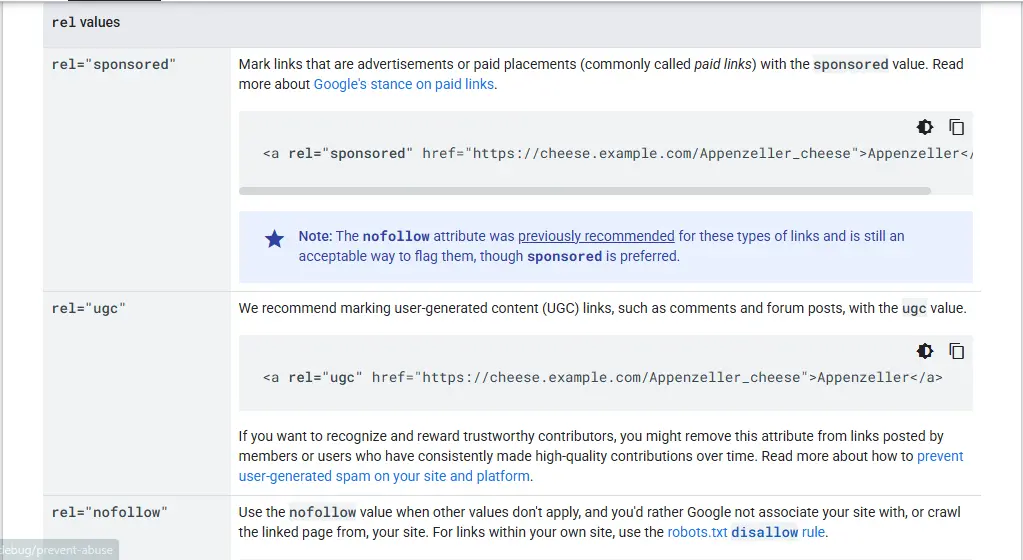
Do-follow” isn’t an official Google term. It’s the common name for a normal link with no special attribute, and it’s the kind of link you want most when building do-follow backlinks for a SaaS website. Google recognizes three attributes that tell it how to treat a link: nofollow, sponsored, and ugc. Since 2019, Google has treated these as hints rather than strict commands. You can read the details in Google’s guide to qualifying outbound links.
In our experience, editorial links with no attribute are the ones that most consistently help commercial pages rank. That’s our observation from client work, not a promise from Google.
Should you ignore no-follow links? No. A no-follow mention in a respected publication still sends referral traffic and branded searches. But the core of your strategy should be normal, editorially earned links.
Our minimum quality checks
Every prospect goes through the same gate. Google doesn’t use Domain Rating (DR), which is Ahrefs’ metric, but we use it as a quick first filter alongside traffic and relevance.
- DR 50 or higher. Lower-rated sites can work, but only when relevance is exceptional.
- 5,000+ monthly organic visits. Check it in Ahrefs or Semrush. A high DR with collapsing traffic is a red flag.
- No spam signals. Look for paid-link footprints, casino or loan links in the sidebar, and sudden traffic cliffs.
- Topical fit. A project management tool earning a link from a cooking blog is wasted effort.
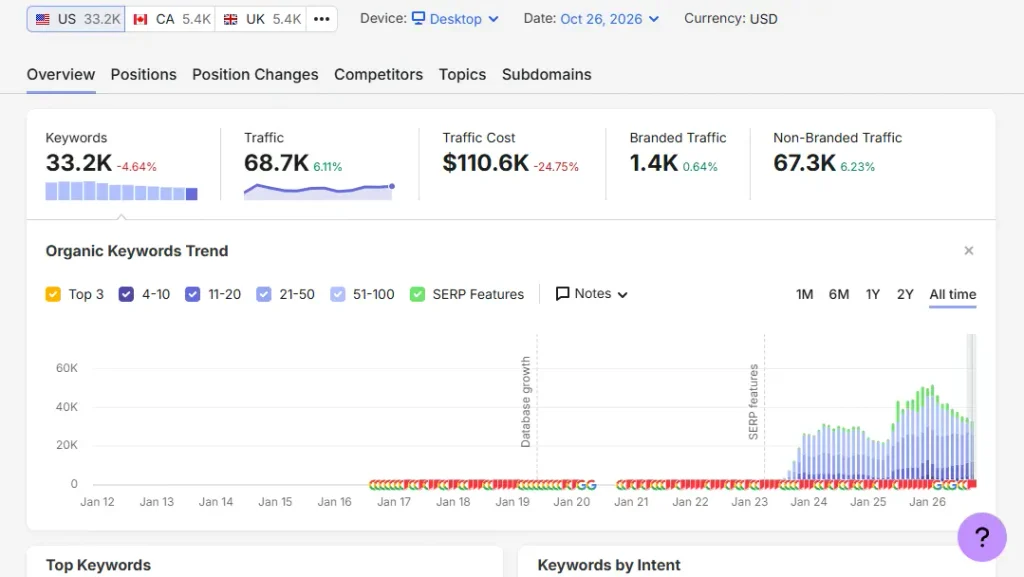
These thresholds came from analyzing backlink metrics and organic ranking movements across 250+ SaaS and B2B competitor profiles. Adjust them to your niche.
Anchor text distribution
Over-optimized anchors are the fastest way to attract the wrong kind of attention. A healthy SaaS profile leans mostly on brand names, then naked URLs, then a smaller share of partial-match anchors. Exact-match commercial anchors should stay rare. Anchors are like salt: a little sharpens the dish, and too much ruins it.
The 4 Link Acquisition Tactics We Use
Tactic 1: Contextual editorial links on niche B2B blogs
A contextual editorial link sits inside the body of an article, surrounded by relevant text, and is placed because an editor judged it useful. That’s the gold standard.
Find the B2B blogs your buyers already read, then offer something specific: a fresh statistic, a quote from your founder, or a section the article is missing. Don’t pitch “a guest post.” Pitch a gap.
Example from our work: A B2B SaaS project earned a link from a DR 75 blog by offering a freshly updated industry benchmark report. In the first quarter, that page sent 14 demo requests and over 200 high-intent referral visits.
Tactic 2: Podcast guesting and integration pages
Podcast show notes and partner integration pages are underrated link sources. Your buyers listen to the same podcasts, and your integration partners already want to explain how the two products connect.
Pitch founders as guests with a story tied to a real metric, like how you cut CAC by changing your sales motion. Then ask integration partners for a dedicated page that links to your product. Both scale well because the relationship does most of the work.
Tactic 3: Linkable assets built on original data
Free tools, ROI calculators, and original industry reports are one of the few ways to earn do-follow backlinks for your SaaS site long after launch, without sending a single new email. A churn calculator, or a benchmark report built from your own product data, gives writers something citable.
Be realistic about the cost. These assets take weeks to build and need active promotion. Publishing and hoping isn’t a plan, so build your outreach list before launch day.
Tactic 4: Unlinked mentions and broken link building
This is the lowest-hanging fruit. Set up brand alerts, find mentions that don’t link to you, and send a friendly outreach request. In our campaigns, these requests get a 34% reply rate versus 12% for cold prospecting.
For broken link building, scan competitor backlink profiles in Ahrefs for dead pages. Then offer your equivalent resource as a replacement. The editor fixes a broken link and you gain a placement.

Step-by-Step Outreach by Cold Email
Cold email still works. It just stopped working for lazy senders.
Step 1: Build your prospect list
Start with your top three competitors. Pull their referring domains, filter for your quality criteria, and remove anything irrelevant or spammy. Look for domains that link to two or more competitors but not you, since those are your warmest targets. Ahrefs calls this a Link Intersect report.
Then find the right person. A named editor beats a generic info@ address every time.
Step 2: Write the pitch
Keep it under 120 words. Open with something specific about their article, state the gap, offer the asset, and ask one clear question. Skip the flattery paragraph.
Here’s a template we’ve used:
Hi [client name],
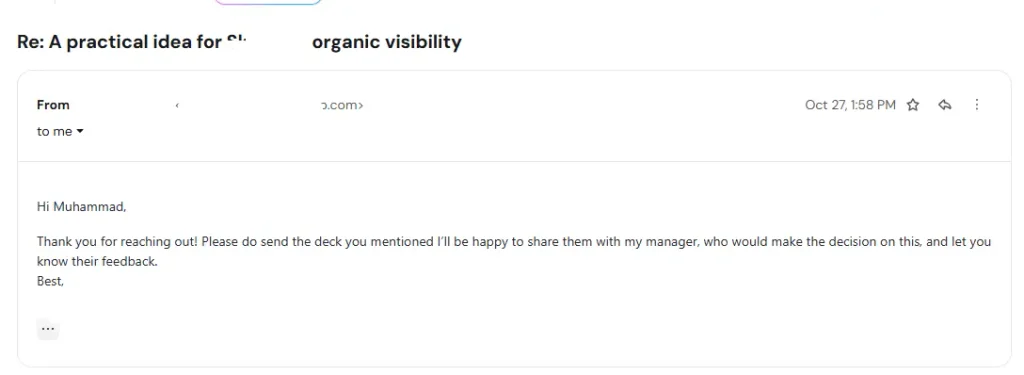
I’ll keep this brief. Novnodo helps brands earn links from relevant sites and appear in AI-generated answers. SaaS is a competitive space for both, and I think a few well-placed partner mentions could make a real difference for [Client`s Company].
If you’re open to it, I can send two or three specific ideas by email, with no call needed. Would that be useful?
Step 3: Follow up and verify
Use a three-touch sequence: the first email, a follow-up after four days, and a final nudge a week later. In our campaigns, most replies come from the follow-ups.
Once someone agrees, expect placement to take two to six weeks. Track every thread on a simple CRM board. Before you mark a link done, confirm that it’s live, carries no nofollow, sponsored, or ugc attribute, and is indexed.
Turning Links into a Strategy
Knowing how to get do-follow backlinks for SaaS websites is only half the job. Individual links don’t build authority. A system does.Your plan needs pacing, targeting, and a long-term view.
Pace your links naturally
Google hasn’t published a rule about link velocity, but sudden spikes can look manipulative, and Google’s spam policies target link schemes. A brand-new domain that gains 40 links in a week is hard to explain, because it usually means paid or automated links.
As a rough guide, newer domains do well with a handful of quality links per month, while established ones can scale up gradually. Match your pace to your site’s age and content output. Steady beats spiky.
Send authority to pages that make money
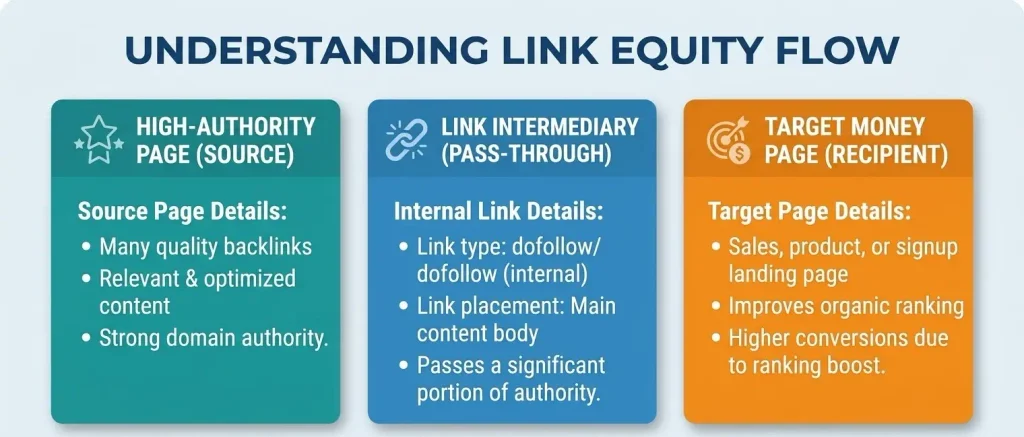
Here’s where most teams leak value. They earn links to the blog while product pages starve. Fix this with internal linking: connect high-authority articles to feature pages, comparison pages, and pricing. Where it feels natural, point some external links straight at bottom-of-funnel pages.
Measure success by pipeline, not link counts. If demo requests and trial signups from organic aren’t growing, the links aren’t working yet.
Build authority for the long term
Authority compounds. Keep a healthy anchor mix, refresh your best linkable assets yearly, and audit your profile quarterly.
Use the disavow tool sparingly. Google says most sites never need it, and it’s meant for situations like a manual action or a large number of spammy links you can’t get removed. See Google’s disavow guidance. Don’t panic-disavow links that merely look low quality.
Over time, organic authority can lower your CAC because your pipeline depends less on paid spend.
Need Help Getting Do-Follow Backlinks for Your SaaS Website?
We built this process because we kept watching SaaS teams pay for links that never converted. At Novnodo, we handle prospecting, outreach, asset creation, and reporting tied to revenue metrics like MRR, LTV, and trial-to-paid conversion.
If you’d rather have specialists do this while you focus on the product, we’re ready.
Frequently Asked Questions
Why are do-follow backlinks for SaaS websites more important than for a standard blog?
SaaS keywords are expensive and competitive, so a software product has to win commercial-intent terms that a blog never needs to chase. A blog can win on informational traffic alone, but a software product has to compete for commercial-intent terms. Editorially earned links without nofollow, sponsored, or ugc attributes are the ones that most reliably help those pages rank.
How do I spot link farms and private blog networks (PBNs)?
Look for thin content, identical layouts across many sites, unnatural outbound links to unrelated niches, and traffic that doesn’t match the site’s authority score. If a seller guarantees a number of links for a flat fee, walk away. Google’s spam policies explicitly cover link schemes.
How many DR60+ links does a SaaS site need to rank on page 1?
There’s no magic number. It depends on the keyword and what competitors have. Compare the referring domains of the current top five results and aim to match them in quality, not just count. For some terms that’s ten links, and for others it’s a hundred.
How long does link building take to show results?
Typically three to six months for meaningful movement, because links need to be crawled and indexed, and are weighed alongside your content quality.
Should I buy backlinks?
No. Google’s guidelines treat paid links meant to pass ranking signals as a violation of its spam policies. Paying for a legitimate editorial sponsorship is different, but it should carry the sponsored attribute, and it won’t give you the same ranking benefit.
Do internal links matter as much as external ones?
They matter a great deal. Internal links decide where your earned authority flows, especially toward product and pricing pages.
Final Thoughts
Getting do-follow backlinks for a SaaS site comes down to three habits: filter hard, pitch with value, and tie every link to pipeline. Skip any one and the whole thing wobbles.
Start small. Audit your current profile, pick one tactic from this list, and run it for 30 days.